
Why entertainment becomes the core of large-scale events
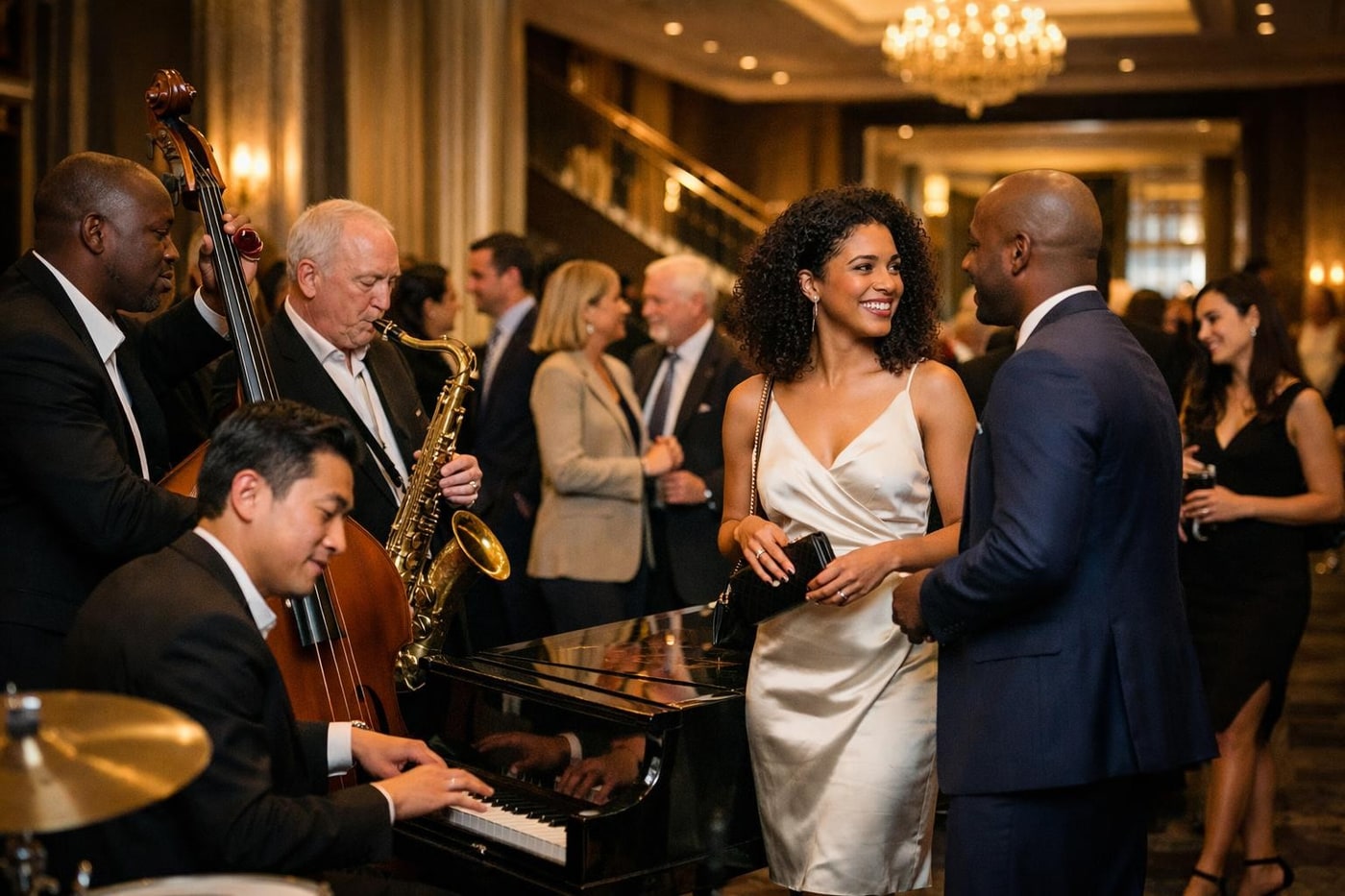
At smaller events, entertainment supports the atmosphere. At large-scale events, it defines it. When you are working with 500 to 1000 guests, corporate event entertainment for large audiences becomes the mechanism that controls energy, shapes guest movement, creates shared moments and drives engagement across the whole venue.
At impressive spaces such as 116 Pall Mall, the scale and grandeur already raise expectations. The room looks the part. The real challenge is making it feel alive. If you would like a venue-specific example, take a look at our 116 Pall Mall case study.
Understanding the reality of large audiences
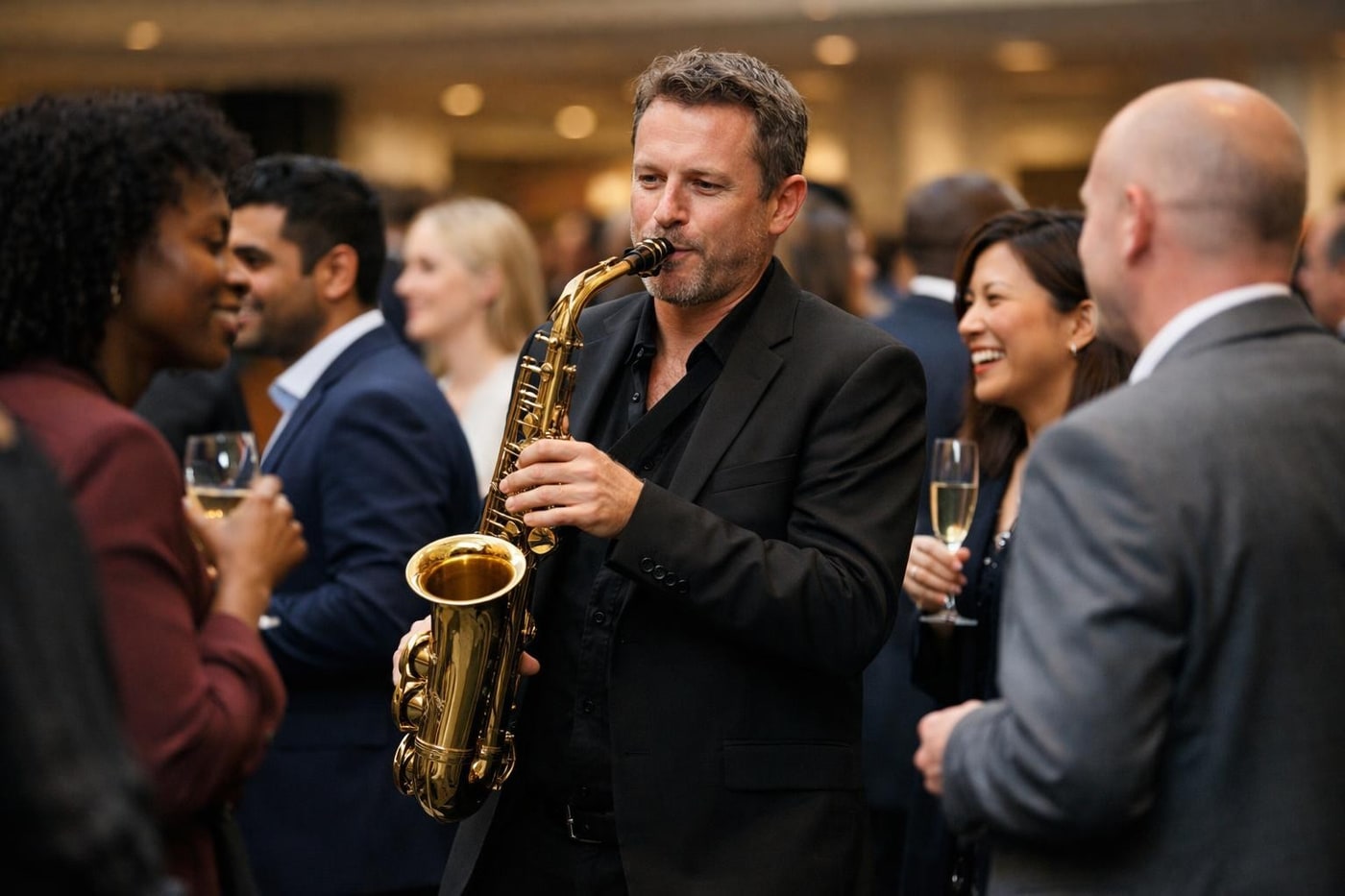
Large audiences do not behave like small groups. They naturally split into clusters, gravitate towards busy areas and avoid spaces that feel empty or low energy. Without a structured entertainment approach, this quickly leads to dead zones, overcrowding in key areas and inconsistent energy across the venue.
The solution is not simply bigger acts. It is smarter design.
- Guests need clear reasons to move through the space.
- Different areas need different levels of energy.
- The entertainment programme must support the event journey, not sit on top of it.
1. Build an entertainment strategy, not a line-up
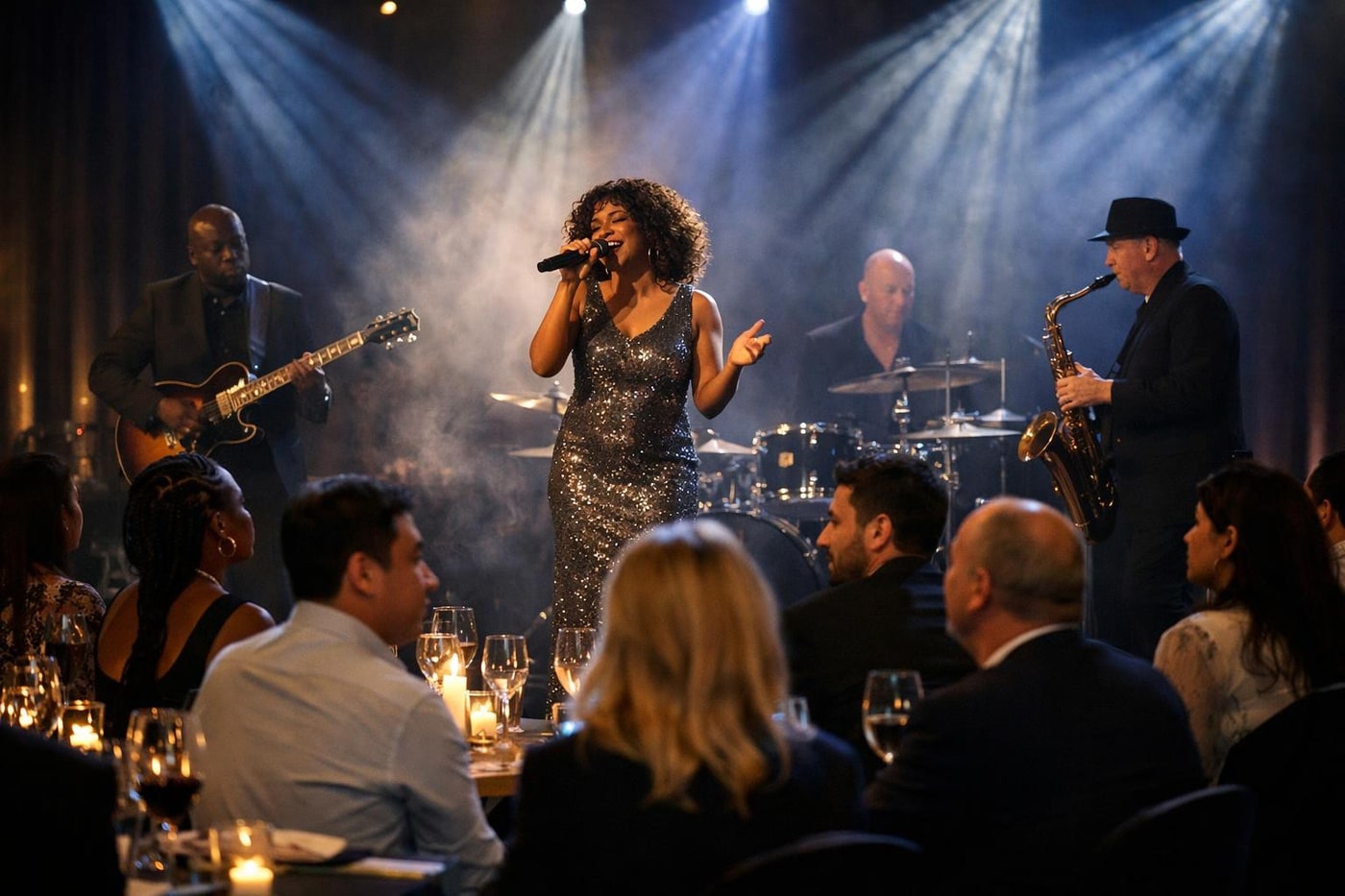
One of the biggest mistakes is booking entertainment without a clear structure. A strong large-scale event needs a designed entertainment journey that guides guests from arrival through to the final peak.
Arrival phase
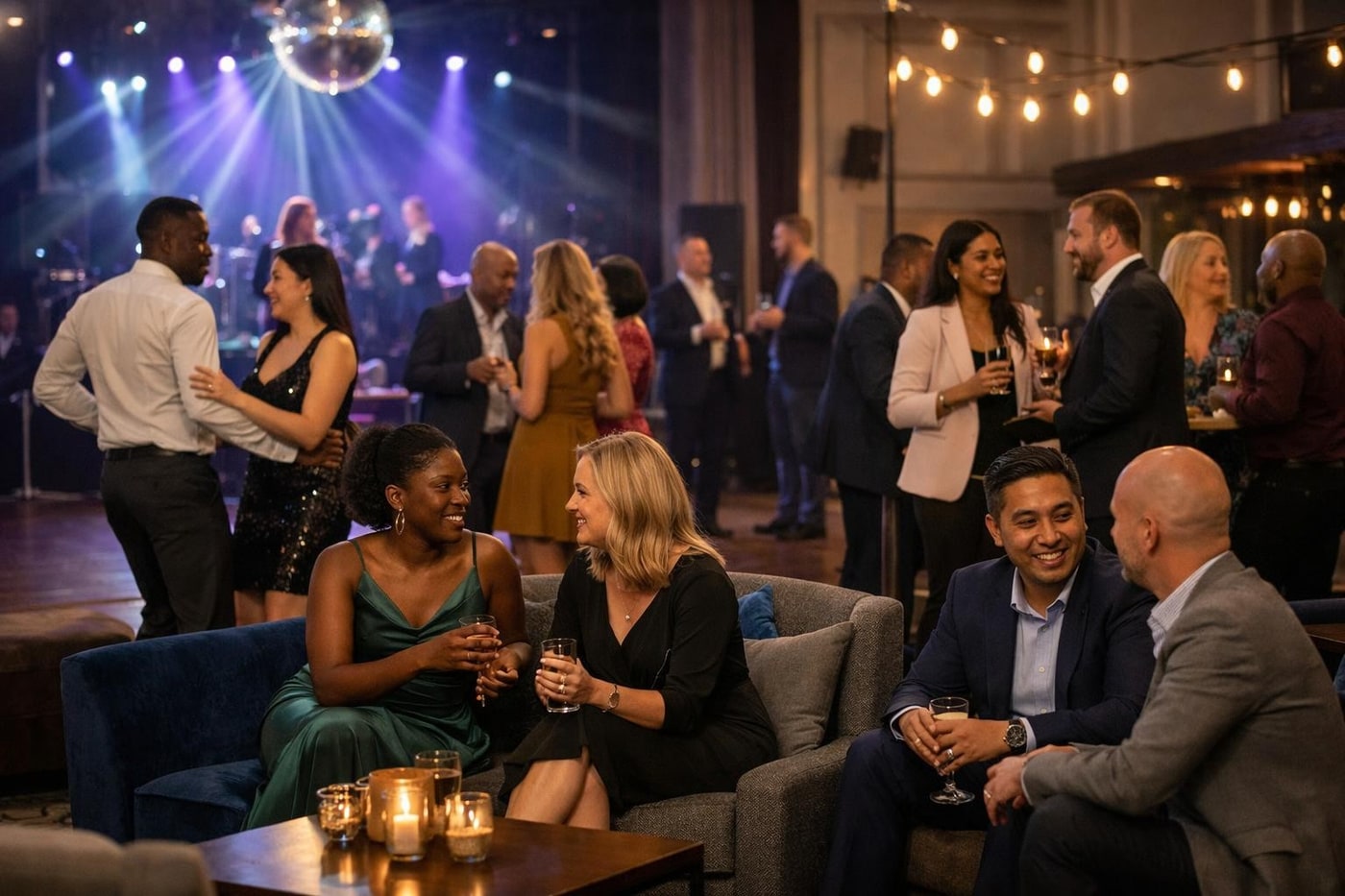
Guests are settling in, so entertainment should feel welcoming, set the tone and allow conversation.
- Live jazz musicians
- Acoustic performers
- Background DJ
Engagement phase
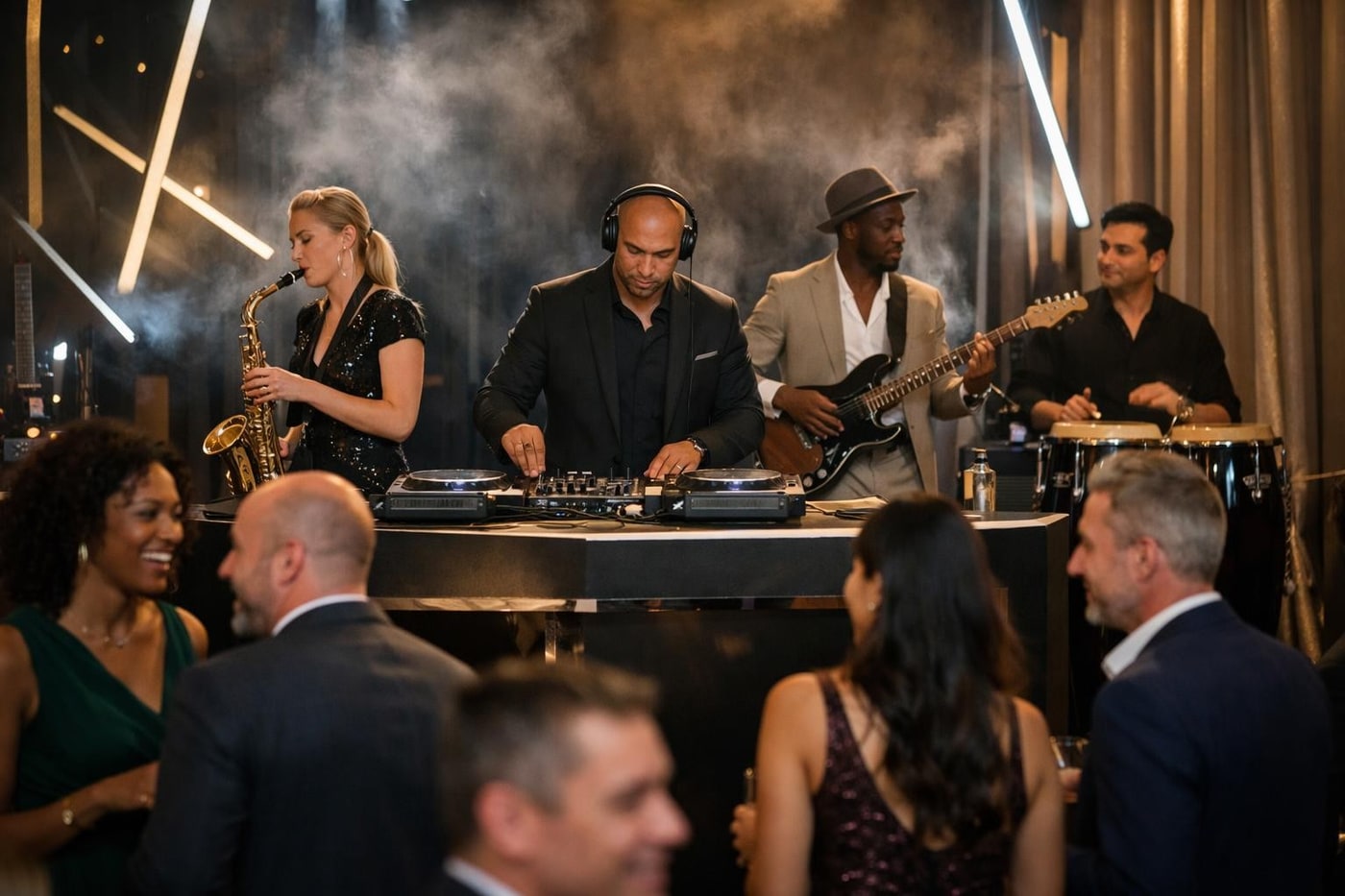
Guests are comfortable and ready for interaction. This is where energy starts to build.
- Roaming saxophonists
- Percussionists
- Interactive performers
Peak moment
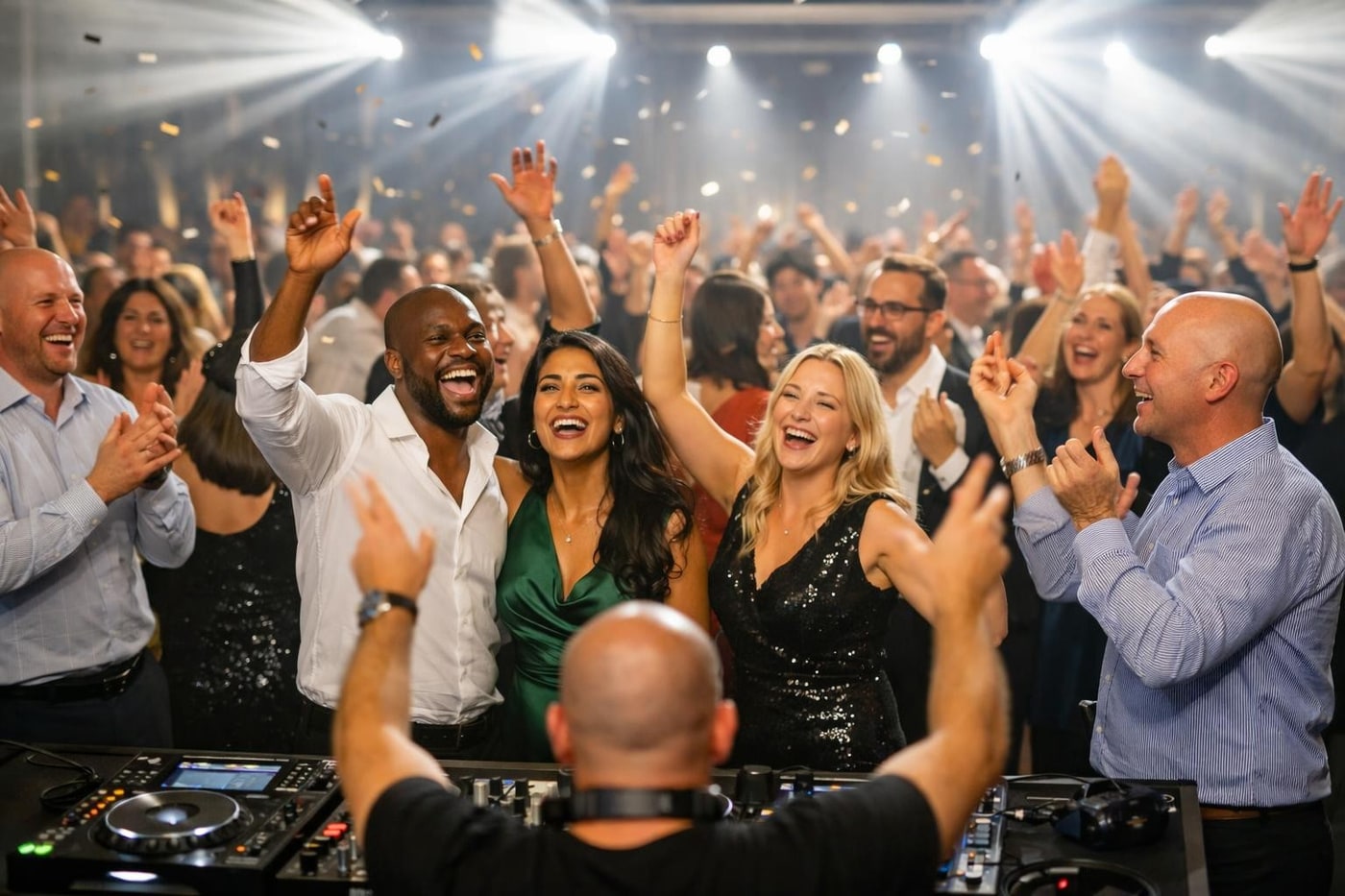
This is where the event comes together and all guests focus on one shared experience. It must be planned, timed and delivered with impact.
- Live band performance
- DJ with live musicians
- Show moment
Party phase
The energy is sustained and elevated. This is where guests fully engage, the dancefloor fills and the atmosphere peaks.
2. Create multiple entertainment zones
At scale, a single focal point is not enough. You need a main stage or central feature, secondary areas with lighter engagement and roaming elements that connect the whole venue.
At a venue such as 116 Pall Mall, this could mean a central dancefloor experience, lounge areas with background music and corridor or breakout activations. The goal is simple: the entire venue should feel active.
3. Design shared moments that unite the room
Large-scale events can feel fragmented if the audience never comes together. The most successful events create moments where everyone is engaged, the room feels connected and energy peaks collectively.
- A choreographed performance
- A headline act
- A coordinated reveal
Without these moments, the event can feel busy but not impactful.
4. Layer entertainment for depth and variety
High-end events are rarely one-dimensional. The strongest programmes combine DJs, live musicians, performers and interactive elements, with each layer serving a clear purpose.
- DJs control flow
- Musicians add atmosphere
- Performers create visual engagement
Together, they create a complete experience rather than a single point of interest.
5. Match entertainment to the audience profile
Not every audience responds in the same way. Corporate culture, age range and event objective all shape what will land well.
- A formal corporate audience may require a slower build.
- A celebratory audience can move more quickly into high energy.
Understanding the audience ensures the entertainment feels relevant, not generic.
6. Integrate entertainment into the environment
Entertainment should not feel separate from the event. It should feel embedded within it.
- Performers interacting with guests
- Musicians positioned within the space
- DJs integrated into the design
This creates immersion and helps the whole experience feel intentional.
7. Use entertainment to control movement and flow
Entertainment is one of the most effective ways to guide guest behaviour without forcing it. Positioning performers in a new area draws guests into it. Increasing music energy signals a shift in the event. A performance moment gathers attention naturally.
Rather than directing guests, you guide them.
8. Scale production alongside entertainment
Entertainment alone is not enough. It must be supported by production that matches the size of the audience and the venue.
- Sound coverage across the entire venue
- Lighting that enhances performance
- Staging that remains visible
At scale, underpowered production reduces impact immediately.
9. Avoid common mistakes in large-scale entertainment
A few avoidable mistakes can weaken the entire programme:
- Starting too strong and losing momentum
- Relying on one main act
- Ignoring sound coverage
- Not planning transitions
Each of these can reduce energy, disrupt flow or dilute the overall experience.
10. Design the transition into the party
This is one of the most critical moments in the evening. Handled poorly, energy drops. Handled correctly, energy lifts dramatically.
To get this right, gradually increase tempo, shift the lighting and introduce stronger entertainment at the right moment. The transition should feel natural and intentional.
11. Maintain energy until the end
Large events often lose momentum towards the end, especially if the programme is not tightly managed. To avoid this, keep entertainment active, maintain music quality and avoid gaps in the schedule.
Consistency is key if you want the room to stay engaged right through to the finish.
12. Finish with intent and impact
The final moments define the event. A strong finish ensures guests leave energised and remember the experience for the right reasons.
- A full dancefloor moment
- A final performance
- A high-energy closing set
Why experience matters at this level
Large-scale entertainment is not about booking acts. It is about designing the experience, managing energy and delivering consistently from the first guest arrival to the final track.
That requires experience, coordination and an understanding of how entertainment, venue layout and production all work together.
Final thought
Entertainment for large audiences is not about scale alone. It is about structure, timing and integration. When done properly, it transforms a large event into a seamless, engaging experience.
If you are planning a large corporate event and need a team that understands how to deliver at scale, Events by Knight can help you design an entertainment programme that fits your audience, venue and objectives.


