
Why retail activations need more than visuals
Retail environments are saturated. On busy high streets such as Oxford Street, brands compete not just with each other, but with constant foot traffic, window displays, street performers and digital distractions. In this environment, visual branding alone is rarely enough.
Even the most beautifully designed setup can be overlooked if it does not give people a reason to stop. That is where using live performance in retail activations becomes so effective. It introduces movement, sound, energy and human connection — the elements that cut through noise and draw people in.
The role of performance in retail environments
Live performance is not simply an entertainment add-on. It is a strategic tool that can capture attention, create a focal point, build a crowd and encourage engagement.
In retail activations, this matters because without a crowd, there is no momentum. Without momentum, there is no engagement.
Why movement is the strongest attention trigger
People are instinctively drawn to movement. In a busy environment, it is one of the fastest ways to break through visual noise.
A dancer moving through space will be noticed before a static display. A performance will be seen before signage is read. This is why performance-led activations are so effective: they do not rely on explanation, they rely on instinct.
Creating an immediate focal point
Every successful retail activation needs a focal point — something that anchors the experience, draws attention and signals that something is happening.
Live performance creates this naturally. In the Swatch activation:
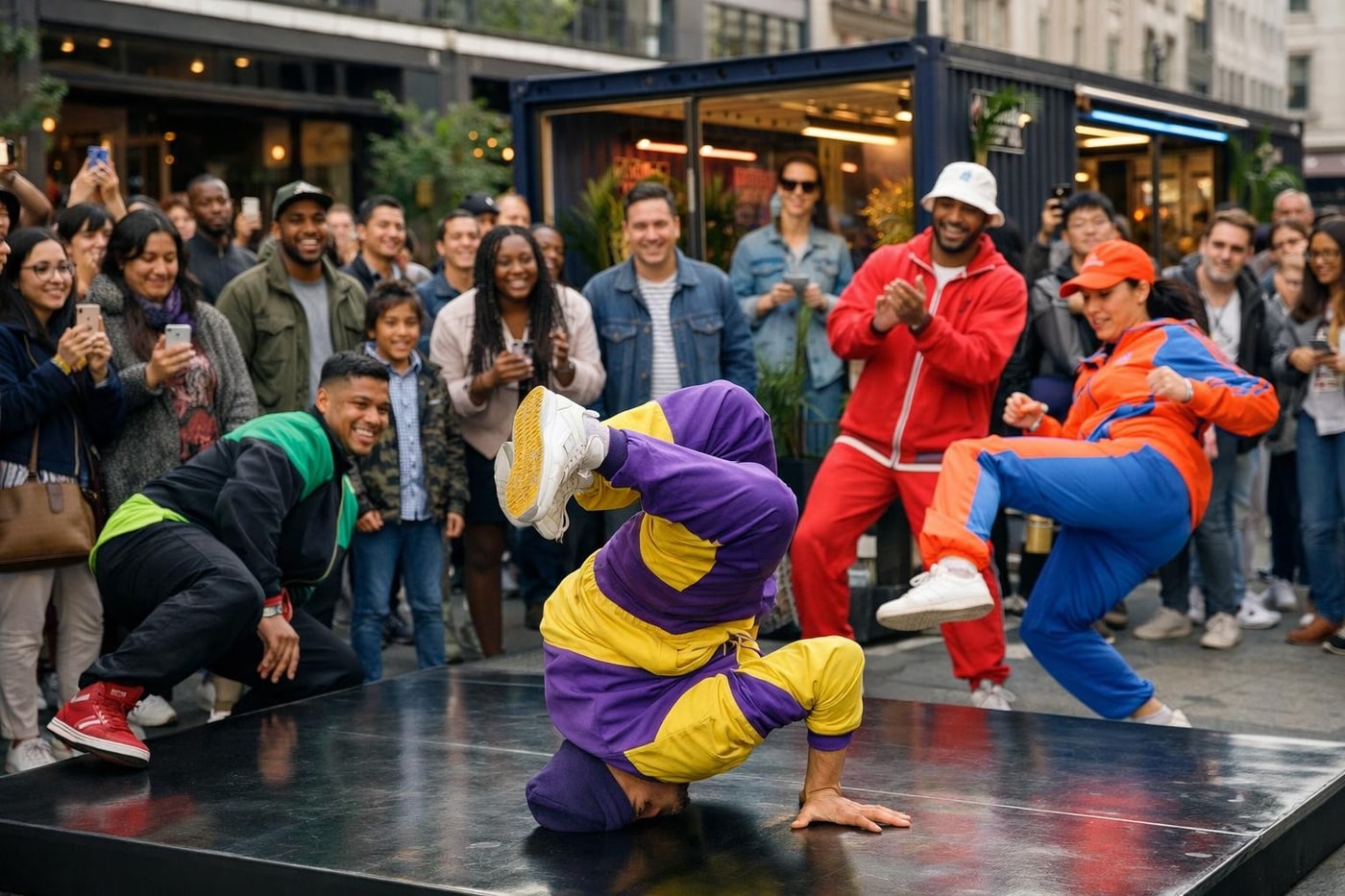
- a breakdance crew performed in bold, colourful outfits
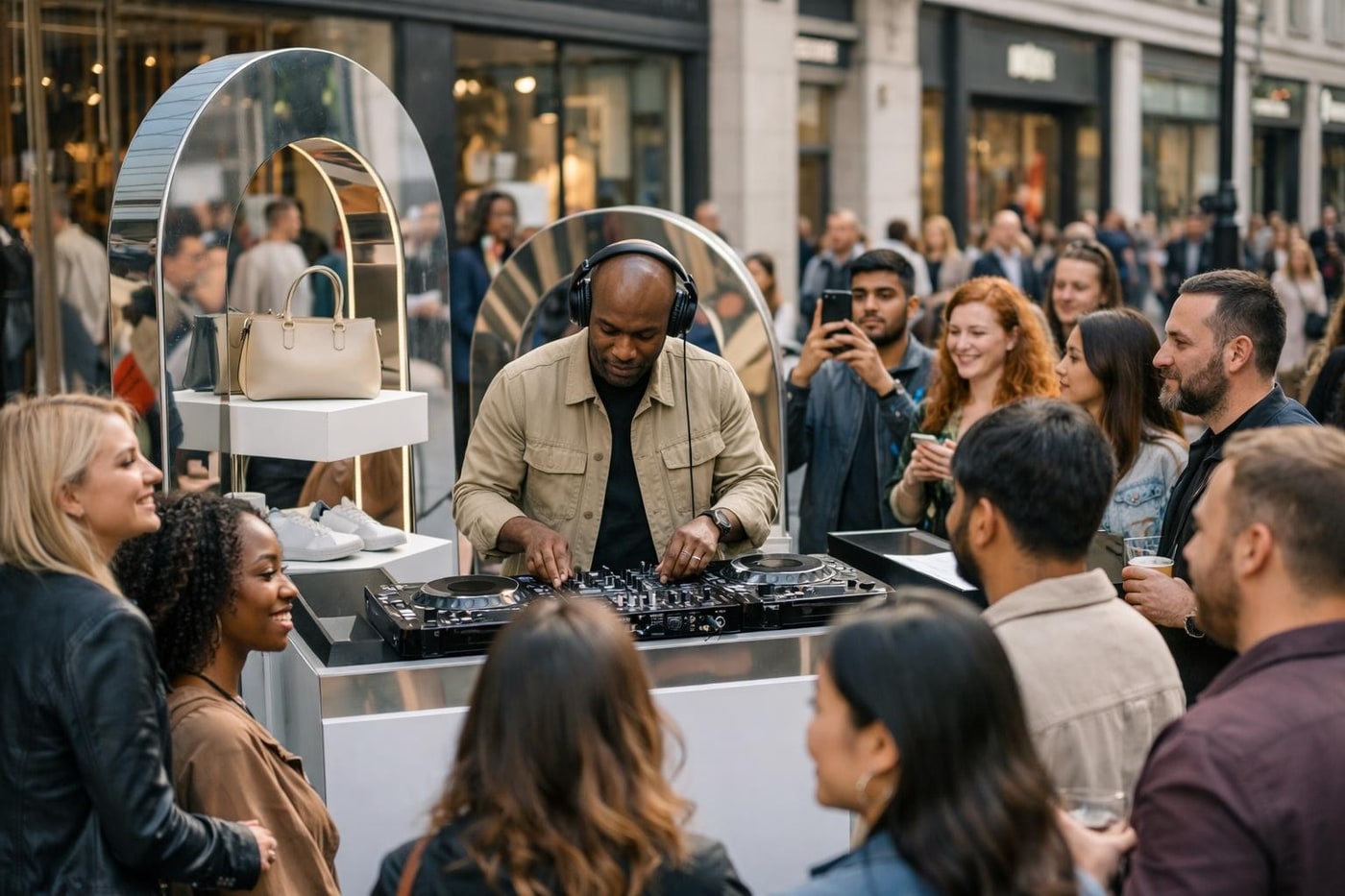
- a DJ created a strong musical presence
Together, they established a clear centre of activity. People could see where to look and hear where to go. That immediate clarity created the initial draw.
For a closer look at the project, see our Swatch brand launch case study.
Building a crowd through performance
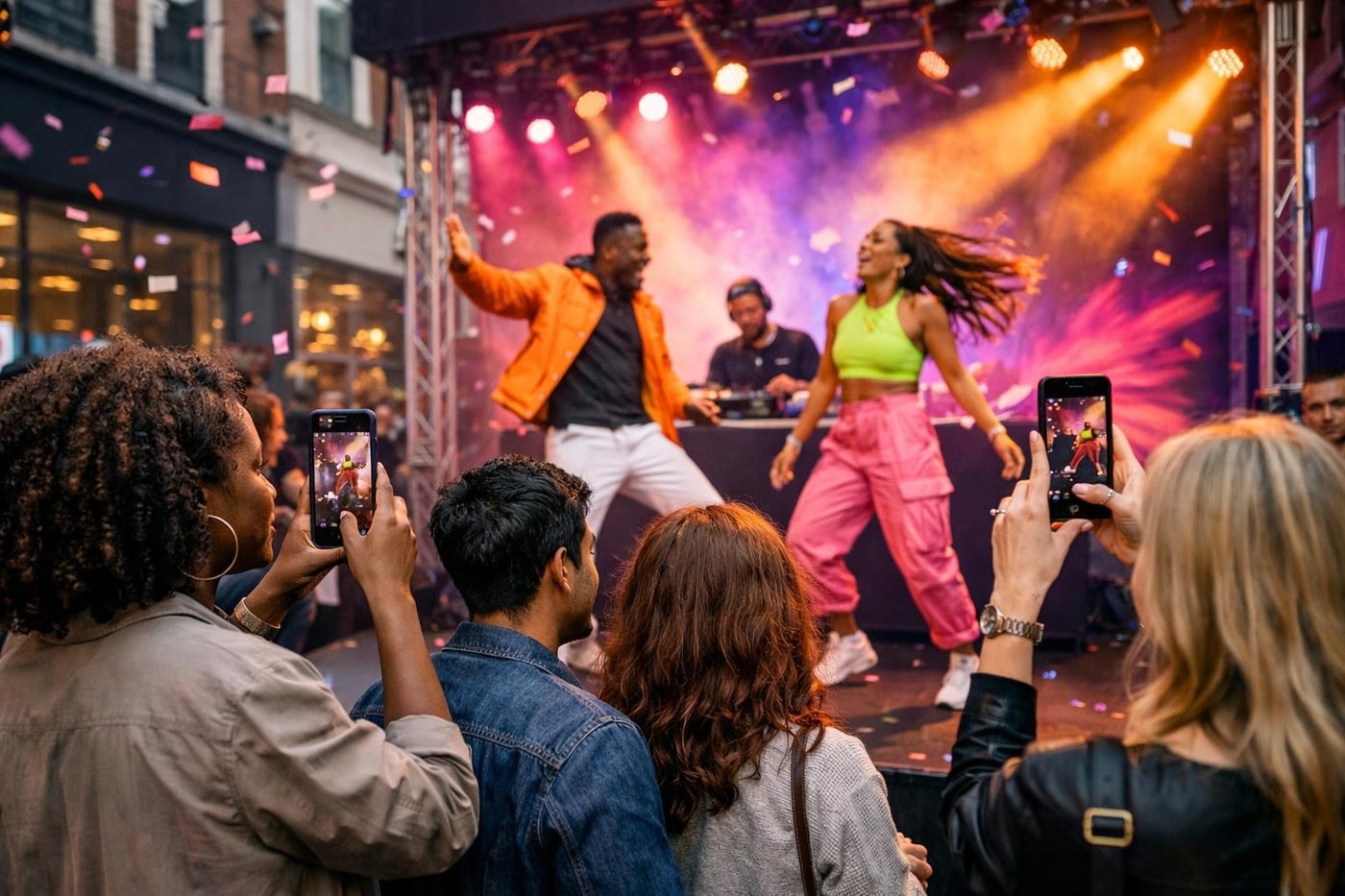
Crowds attract crowds. It is one of the most powerful dynamics in experiential marketing, and live performance accelerates it.
Performance encourages people to stop, holds attention and creates curiosity. As more people gather, the activation gains momentum. Others notice, they stop and the crowd grows. The result is a self-sustaining cycle of engagement.
Turning spectators into participants
The goal of a retail activation is not just to attract attention, but to create participation. Live performance helps bridge that gap by lowering the barrier to engagement.
Once people are watching, they are more open to:
- interaction
- conversation
- product engagement
The key is making sure the transition feels natural. Performance should lead into interaction, not sit separately from it.
Aligning performance with brand identity
Not all performance suits every brand. The style, tone and energy must reflect the brand itself.
For Swatch, the brand identity is bold, colourful, energetic and youthful. The use of breakdancers in vibrant outfits aligned perfectly with that personality. It felt authentic and reinforced the brand rather than distracting from it.
This alignment is critical. If performance feels disconnected, the activation loses clarity.
Creating a multi-sensory experience
Live performance engages multiple senses. It combines visual movement, sound and atmosphere, creating a richer experience than visual design alone.
In retail environments, that is particularly powerful. It helps the activation stand out from its surroundings, adds depth and holds attention for longer.
Designing performance that works throughout the day
Retail activations often run for extended periods, so performance needs to be structured. Continuous performance can lead to fatigue, while inconsistent performance can reduce impact.
The most effective approach is to design performance in cycles. This allows energy to build, crowds to form and moments to peak. Between those moments, music and atmosphere maintain engagement, creating a rhythm to the activation.
Integrating performers into the space
Traditional performance often separates performers from the audience. In retail activations, this should be avoided.
Performers should feel part of the environment. This can include:
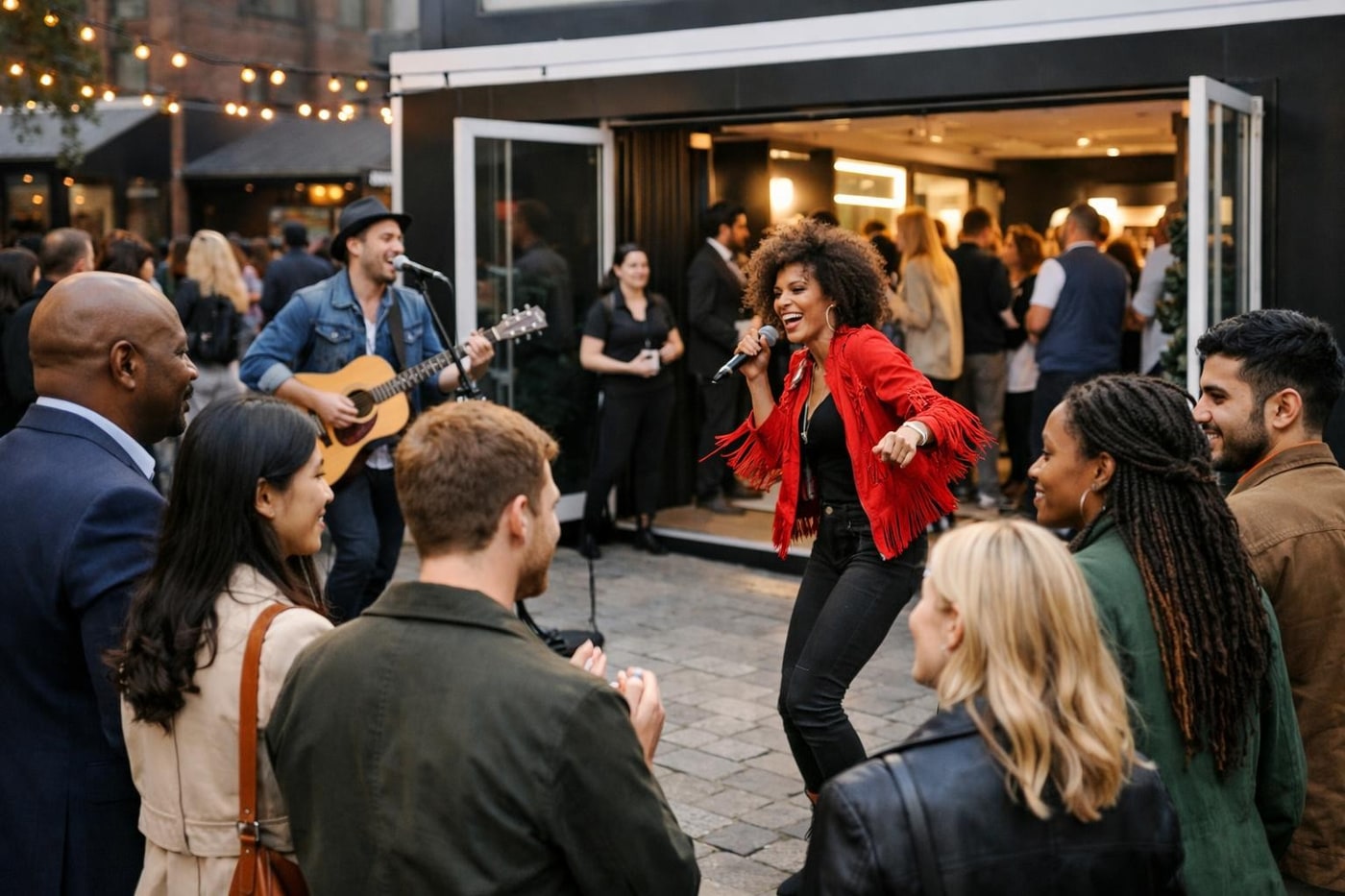
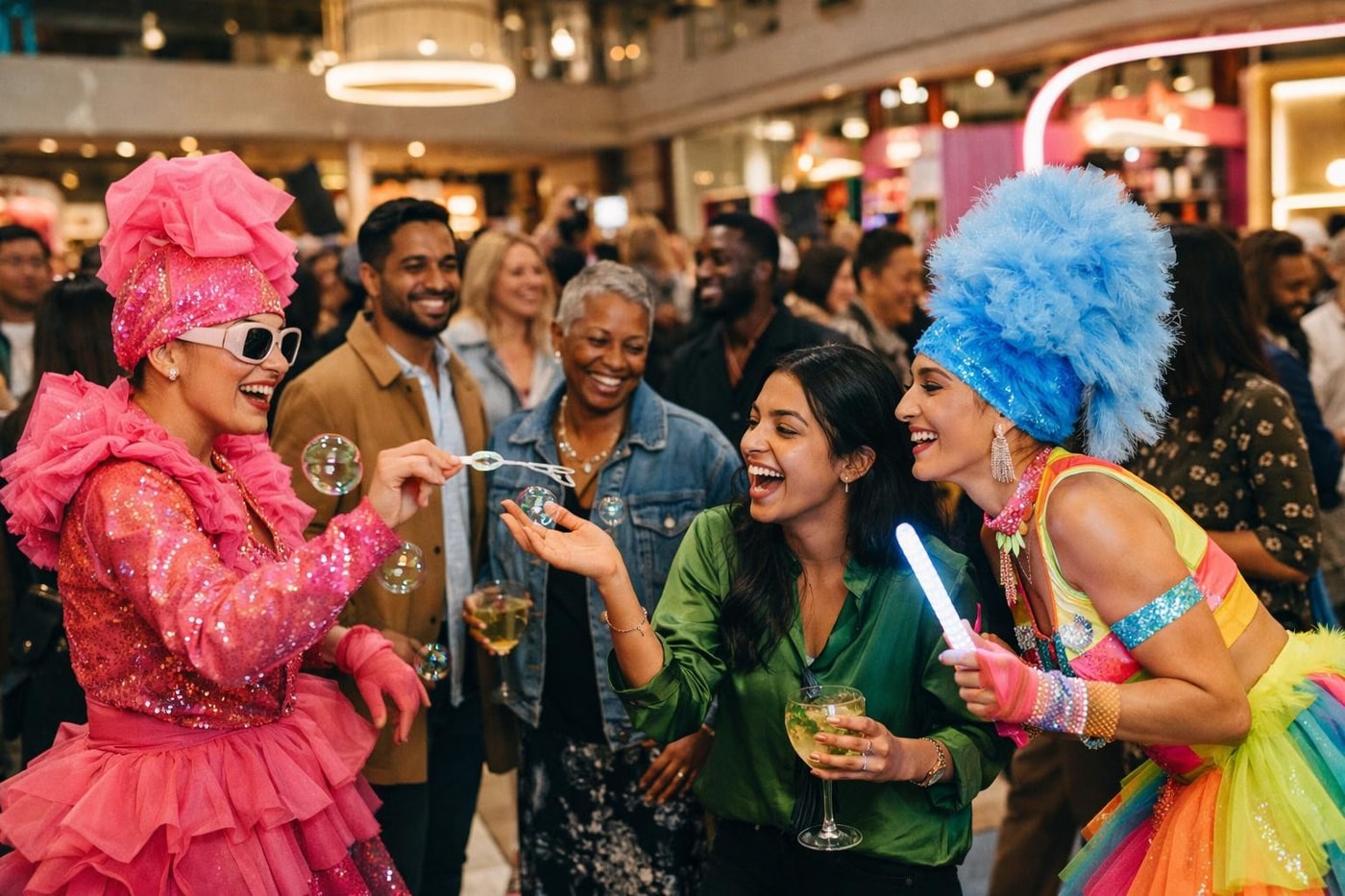
- moving through the crowd
- interacting with guests
- blending performance with engagement
This creates a more immersive experience. Guests feel involved rather than observing from a distance.
Creating shareable moments through performance
Live performance is naturally shareable. People are more likely to film movement, capture high-energy moments and share visually engaging content.
To maximise this, you should ensure a strong visual identity, use dynamic movement and create moments that stand out. In the Swatch activation, the combination of colour, music and performance created content that was shared in real time, extending the reach of the activation far beyond the high street.
Supporting product interaction through performance
Performance should not exist in isolation. It should support the product.
This can be achieved by positioning product interaction points near performance areas, using performers to guide attention towards the brand and creating a natural flow from watching to engaging. In the Swatch activation, once guests were drawn in, they moved into the branded environment where product interaction could take place. That connection is what drives value.
Avoiding common performance mistakes
There are several pitfalls to avoid:
- performance that is too subtle and fails to capture attention
- performance that is too intense and overwhelms the environment
- a lack of alignment with the brand, which creates confusion
- poor positioning, which reduces visibility
Each of these can be avoided with careful planning.
The importance of coordination and execution
Live performance adds complexity. It requires timing, coordination and clear direction. When done well, it feels seamless. When done poorly, it feels disjointed.
Execution is what determines success.
Why live performance requires expertise
Performance-led activations are powerful, but they require experience. They sit at the intersection of creativity, production and audience behaviour.
Understanding how those elements work together is essential. It is what ensures the activation delivers results in real-world environments.
Final thought
Live performance is one of the most effective ways to transform a retail activation. It captures attention, builds energy and creates a reason for people to engage.
In busy environments, it provides a clear advantage.
Planning a performance-led retail activation
Events by Knight specialises in designing and delivering retail activations that use live performance to capture attention and drive engagement. From creative direction to execution, every detail is designed to ensure your activation stands out in high-footfall environments.
If you are planning a retail activation or product launch, get in touch to discuss how we can bring your brand to life.


