
How to Surprise Guests at Corporate Events

Most corporate events follow a predictable format: guests arrive, network, eat, listen and leave. Even when that structure is delivered well, it can still feel familiar. And familiarity reduces impact. That is why How to Surprise Guests at Corporate Events is such a valuable approach for event planners who want to create a moment people genuinely remember.
Surprise interrupts expectations. It captures attention instantly, creates emotion and gives an audience something they did not see coming. When it is done properly, it transforms an event from something people attend into something they talk about afterwards.
Why surprise is one of the most powerful tools in events

Surprise works because it breaks routine. The moment something unexpected happens, people stop what they are doing. They look up, listen and engage. In a corporate setting, that shared reaction can bring the whole room into the same moment.
- It breaks routine
- It focuses attention
- It creates curiosity
This is why surprise can be so effective in corporate event design. It cuts through distraction and gives your message more weight.
The difference between planned and predictable
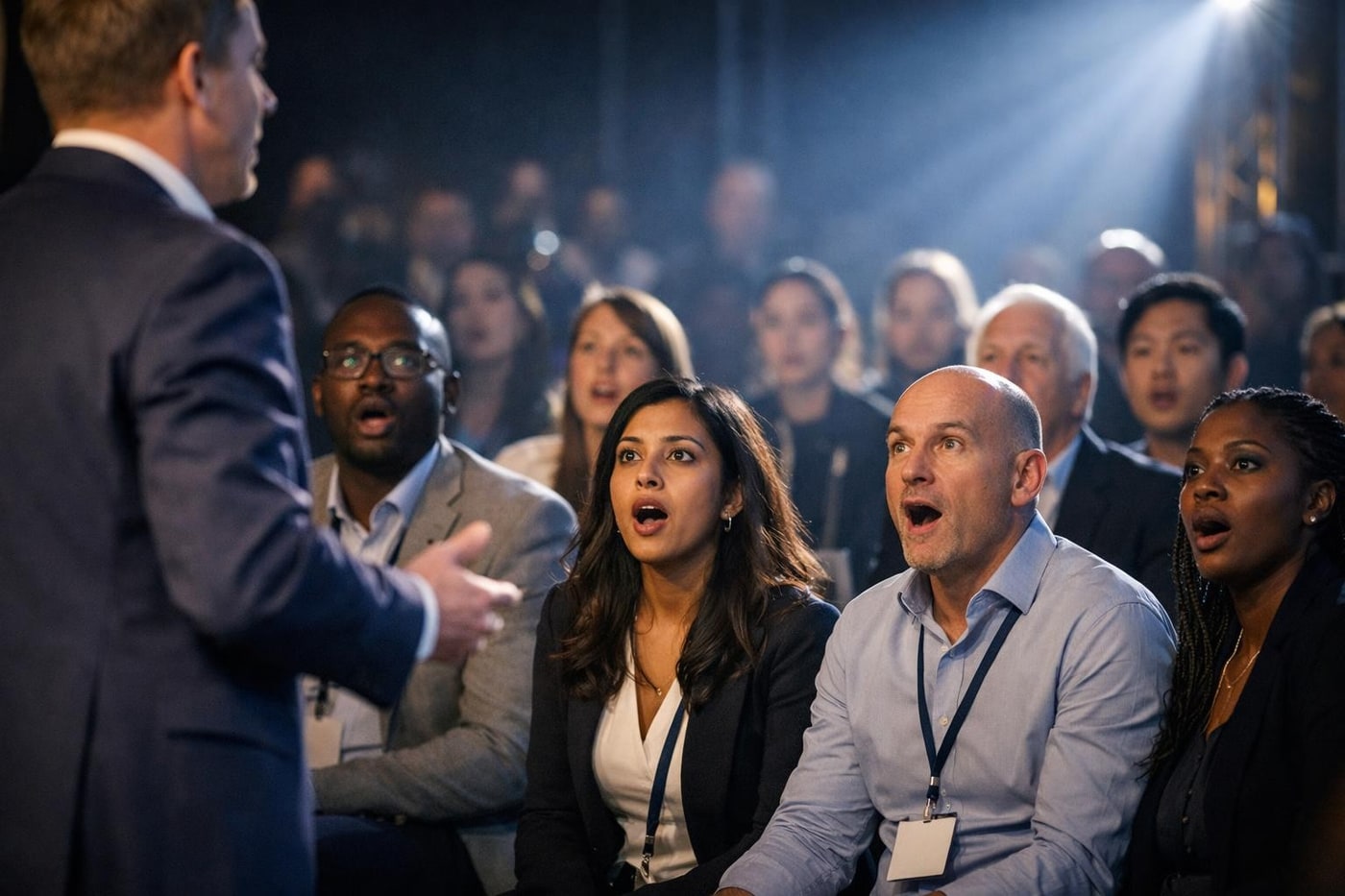
Every event is planned, but not every event should feel predictable. The aim is to design something that is structured behind the scenes, yet still feels spontaneous to the audience. That balance is critical.
If a surprise feels too obvious, it loses impact. If it feels too unstructured, it can become confusing. The most effective moments sit in the middle: they feel natural, but unexpected.
Start with a clear intention

Not every event needs a surprise, and not every surprise will work. The first step is deciding why the moment exists. Is it to energise the room, celebrate an individual, introduce a key moment or shift the atmosphere?
In our Unilever flashmob case study, the intention was to honour a departing CEO. The surprise was not random; it was meaningful. That is what made it powerful.
Understand your audience
Surprise only works when it resonates with the audience in the room. Different groups respond in different ways, so you need to consider the tone of the event, the culture of the organisation and the expectations of the guests.
A high-energy reveal may be perfect for one audience. A more emotional moment may land better with another. Knowing the difference helps the moment feel appropriate rather than forced.
Design the build-up carefully
One of the most important parts of any surprise is the build. If the reveal happens too quickly, it can feel abrupt. If it takes too long, it loses momentum. The best build feels subtle, creating anticipation without giving the game away.
- Small cues
- Changes in atmosphere
- Slight shifts in energy
Those signals help guests sense that something is happening without fully understanding what it is.
Use distraction to your advantage
A well-designed surprise often works best when guests are focused elsewhere. That contrast makes the reveal feel more unexpected. Common moments include:
- During a speech
- Between programme segments
- In a relaxed social moment
When the surprise is revealed, the shift in attention is immediate.
Create a strong reveal
The reveal is the point where everything changes. It needs to be clear, impactful and immediate. A sudden change in music, a performer stepping forward or a sharp shift in atmosphere can all trigger the moment effectively.
The audience should instantly understand that something significant is happening. That clarity is what captures full attention.
Use performance to deliver the surprise
Live performance is one of the most effective ways to create surprise because it combines movement, sound and visual impact. In the Unilever activation, a flashmob format allowed performers to emerge from within the audience, which made the reveal far more powerful.
Guests did not expect it, and that genuine surprise created real reaction. Performance gives you a way to move a room physically and emotionally at the same time.
Build the moment to a peak
A successful surprise should not stay at one level. It needs to build. That can mean adding performers, increasing the energy of the music or expanding the scale of the moment as it unfolds.
The goal is to create a clear peak. That is the moment people will remember and talk about later.
Create an emotional connection
Surprise becomes more powerful when it is tied to emotion. Joy, nostalgia and appreciation are particularly effective in corporate settings because they feel positive and human.
In the Unilever example, the surprise was tied to a meaningful tribute. It was not just unexpected; it was significant.
Make the moment feel authentic
Authenticity is critical. If a surprise feels staged or forced, it loses impact. To avoid that, keep the concept simple, align it with the event and make sure it feels natural within the wider programme.
Involving real people, such as employees, can enhance authenticity and make the moment more personal.
Integrate the surprise into the event flow
A surprise should feel like part of the event, not something separate from it. That means timing it carefully, placing it in the right part of the programme and ensuring it supports the overall objective.
When it is integrated properly, it enhances the whole experience rather than interrupting it.
End the moment effectively
The way a surprise ends matters just as much as the reveal. It should feel complete, clear and intentional so guests can process what they have just seen. A strong ending also helps the event flow back into the programme smoothly.
That sense of resolution matters, especially when the moment carries emotional weight.
Avoid common mistakes
There are several pitfalls to avoid when planning surprise moments for corporate events. Overcomplicating the idea can make it hard to follow. Poor timing can weaken impact. Forcing emotion can make guests uncomfortable. And without rehearsal, delivery can suffer.
- Keep the idea simple
- Choose the right timing
- Rehearse thoroughly
- Give clear direction to everyone involved
Each of these helps the moment feel seamless and confident on the day.
Why surprise requires careful planning
Although surprise appears spontaneous, it needs detailed planning behind the scenes. Coordination, timing, rehearsals and clear direction all matter. Every element has to be controlled so the final experience feels effortless to the audience.
That is the real skill in designing surprise: making something complex look natural.
How to measure success
Success can be measured by the audience reaction, the level of engagement and the emotional response in the room. Did people react immediately? Did they feel something? Did the moment stay with them after the event?
Those are the indicators that the surprise worked.
Planning a corporate event with impact
Surprise is one of the most powerful tools in event design. Used well, it transforms an ordinary moment into something memorable, captures attention, creates emotion and leaves a lasting impression.
At Events by Knight, we design and deliver corporate experiences with well-executed surprise moments that feel thoughtful, relevant and engaging. From concept through to delivery, every detail is planned to help your event stand out.
If you are planning a corporate event and want to create a moment that truly connects with your audience, speak to our team about bringing your vision to life.


