
How to Keep Guests Engaged at Large Outdoor Events
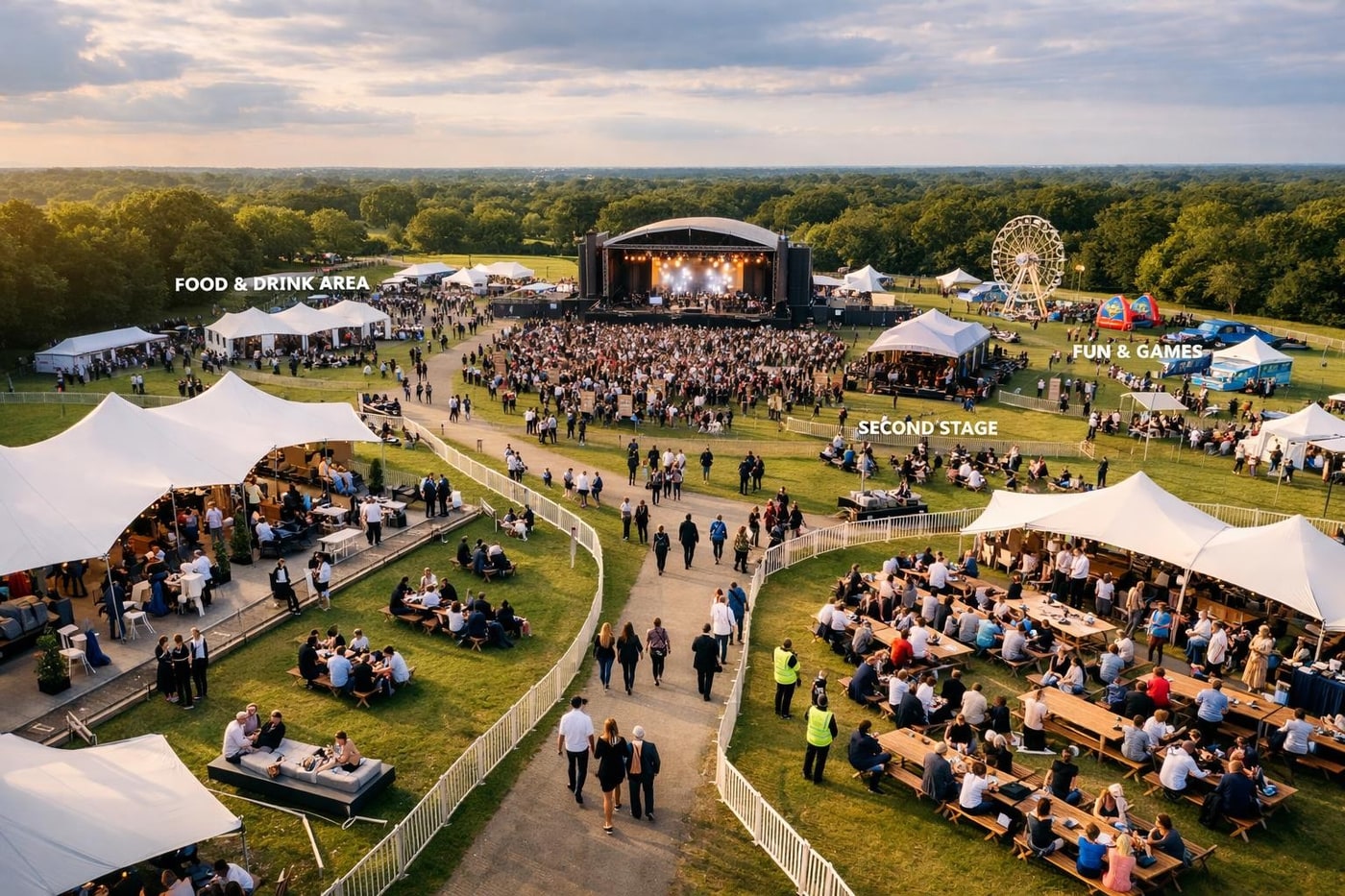
Large outdoor events can be exciting, impressive and full of possibility. They offer space, freedom and a sense of scale that indoor venues often cannot match. But they also come with one major challenge: keeping guests engaged.
When people are spread across a large site, it can be difficult to maintain atmosphere. Some areas may feel busy while others feel quiet. Entertainment may only reach part of the audience. Guests may drift between zones without feeling connected to the event as a whole.
This is why outdoor event entertainment needs to be planned differently. For a large outdoor event to feel successful, the energy needs to move. Guests need reasons to explore, gather, interact and stay interested. Entertainment should not be confined to one place unless the whole audience can experience it properly.
With the right planning, outdoor events can become immersive, high-energy and memorable.
Understand the Site First
Before choosing entertainment, it is important to understand the event site.
Outdoor venues can vary hugely. A racecourse, festival field, country estate, stadium concourse or city square will all create different challenges.
Think about where guests will arrive, where they will spend time, where natural gathering points will form and where quieter areas might need support.
You should also consider practical factors such as:
- Power supply and technical access
- Guest flow and crowd movement
- Weather exposure and shelter
- Sound restrictions and local requirements
- Visibility across wide open spaces
- Safety, access and emergency routes
Entertainment should be planned around the site, not forced into it.
Avoid Relying on One Fixed Entertainment Point
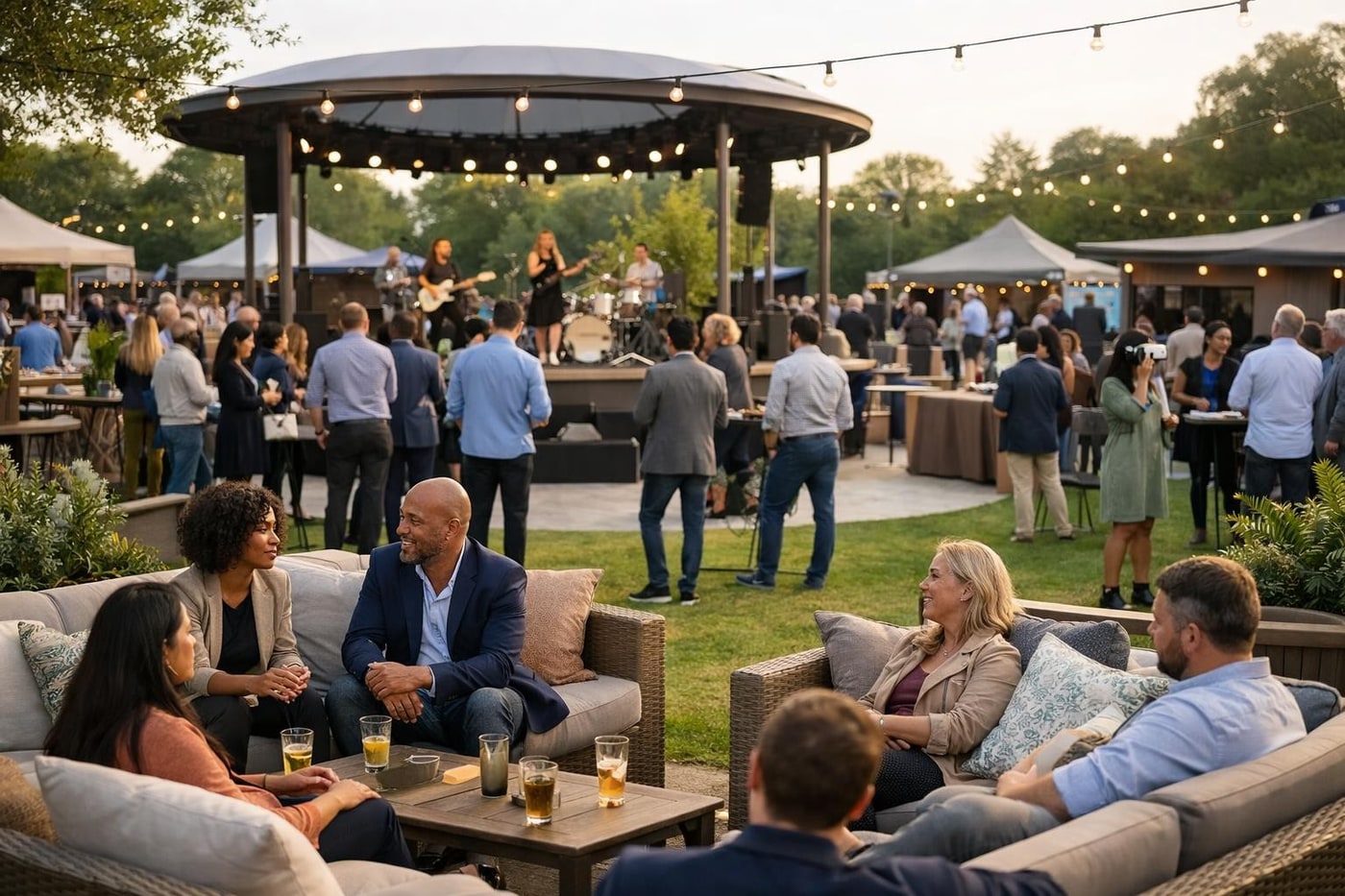
At many large outdoor events, the instinct is to create one main stage. This can work well for headline moments, but it may not be enough to keep the whole site engaged.
If guests are spread across a large area, a fixed stage may only serve the people nearby. Others may feel disconnected or may not even realise entertainment is happening.
This is where roaming and mobile entertainment can make a real difference. Instead of asking guests to come to one central location, the entertainment can move through the site and reach different areas throughout the event.
Use Roaming Entertainment to Spread Energy
Roaming entertainment is one of the most effective ways to keep guests engaged at large outdoor events.
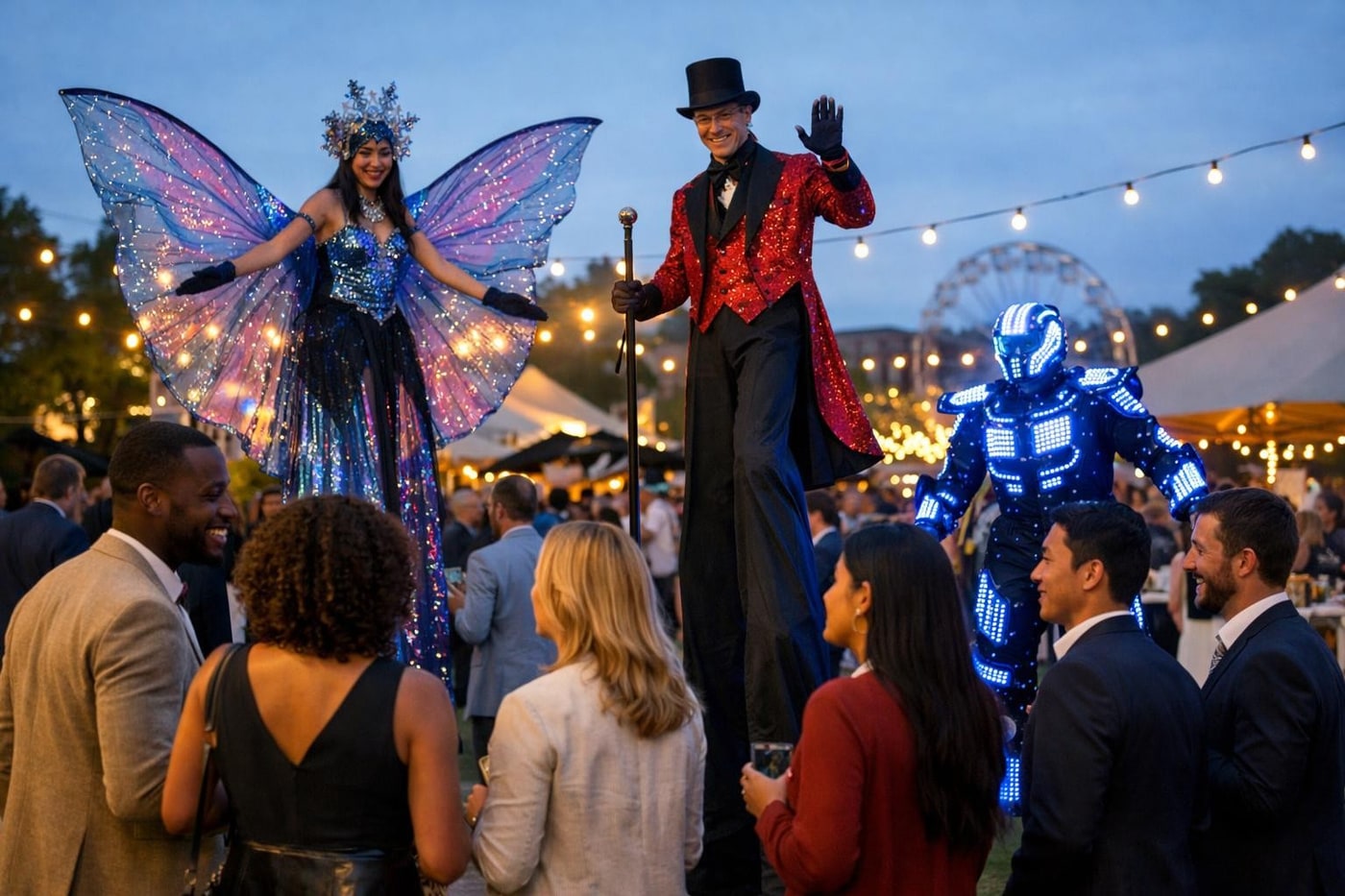
This could include roaming DJs, musicians, dancers, magicians, stilt walkers, living statues, theatrical hosts, circus performers or immersive characters.
Why it works
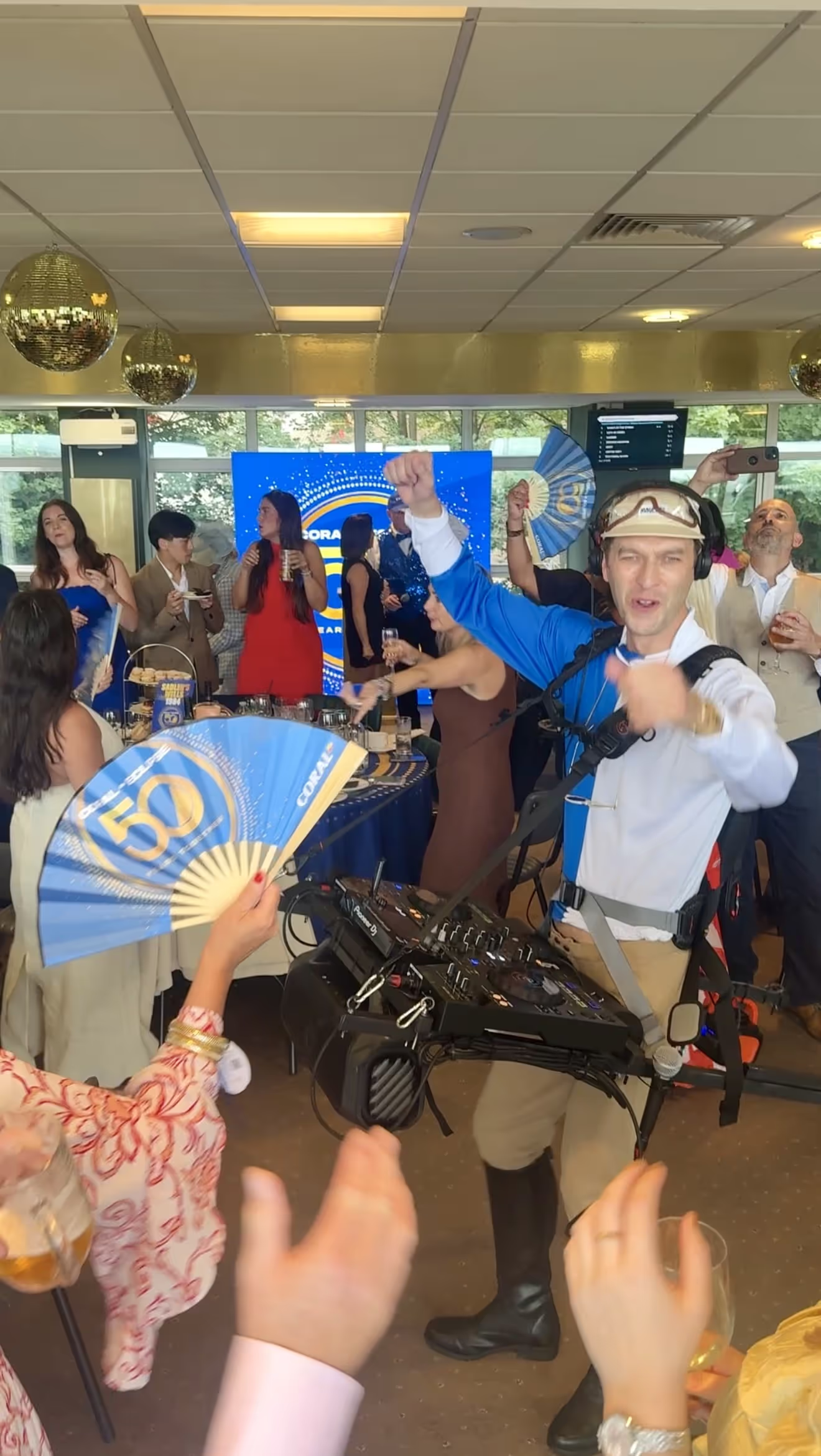
Roaming acts create atmosphere as they move. They help avoid dead zones and make the event feel active across the full site.
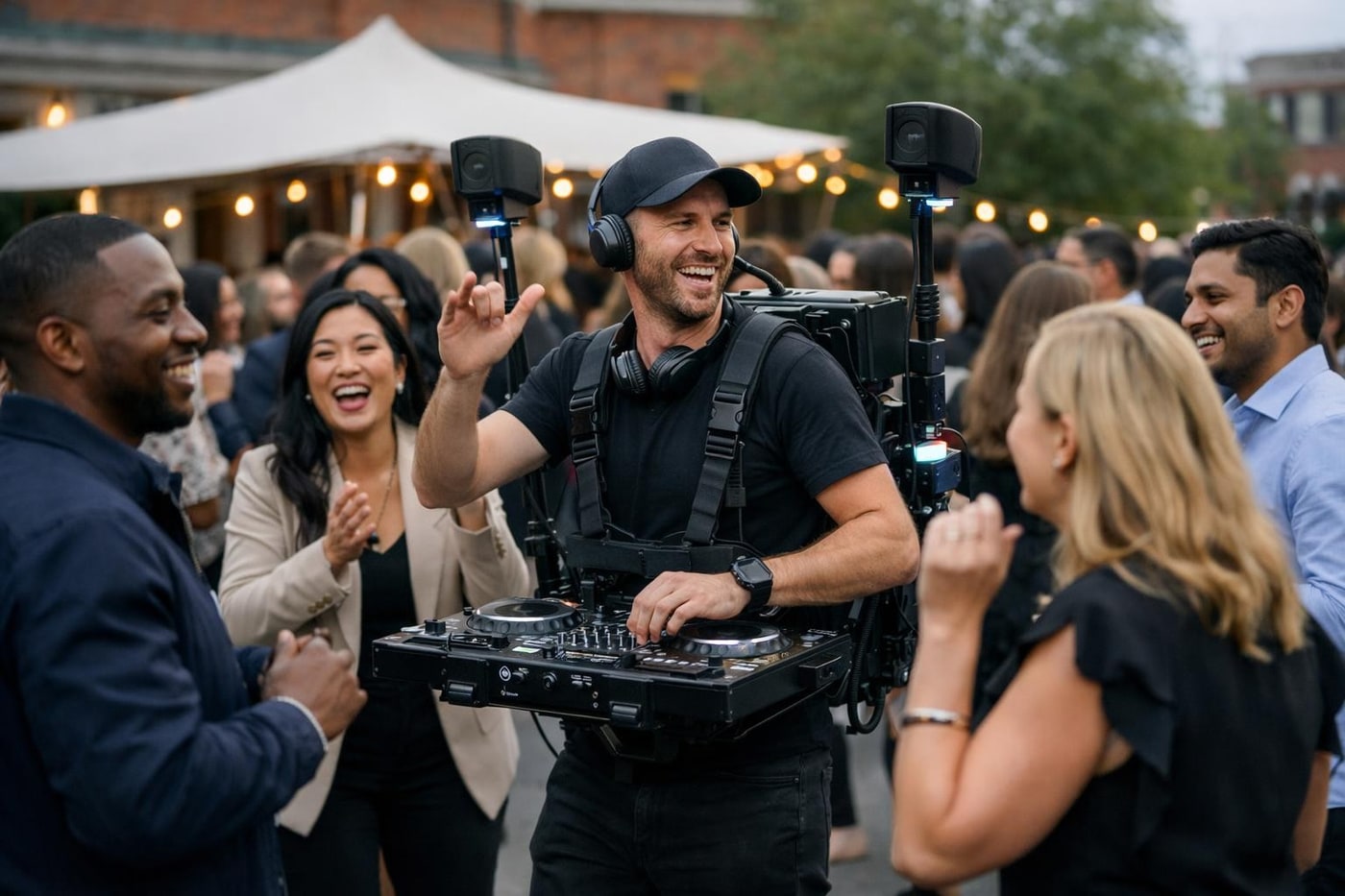
A roaming DJ, for example, can bring music directly to different groups of guests, creating energy wherever it goes. This is particularly useful when guests are moving between hospitality areas, bars, food vendors and viewing points.
We have seen this approach work well in practice at our Coral’s 50th anniversary celebration case study, where a mobile DJ concept helped engage a large crowd across an open racecourse environment.
Create Zones with Different Energy Levels
A large outdoor event should not feel the same everywhere.
Different zones can serve different purposes. One area might be high-energy and music-led. Another might be relaxed and social. Another might focus on food, drinks or brand activations.
This gives guests a reason to explore and allows them to choose the experience that suits them at different points in the event.
Match the act to the area
Entertainment can help define these zones. A live acoustic act might suit a hospitality area, while a roaming DJ or percussion act might support a busier crowd space.
The aim is to create variety while keeping the overall event connected.
Build a Strong Schedule
Outdoor events can lose momentum if the schedule is too loose.
Guests need moments to look forward to. These might include live performances, roaming entertainment appearances, competitions, announcements, reveals, headline acts or finales.
However, the schedule should not feel too rigid. Outdoor events often benefit from a mix of planned moments and spontaneous entertainment.
A good structure might include arrival entertainment, roaming performances throughout the day, a central highlight moment and a strong closing feature.
This keeps energy moving without making guests feel over-managed.
Think About Sound Carefully
Sound is one of the biggest challenges at outdoor events.
Music needs to be loud enough to create atmosphere, but not so loud that it causes issues with neighbouring areas, local restrictions or guest comfort.
Large sites may need multiple sound points or mobile sound solutions. A single speaker system may not cover the full space effectively.
Roaming music concepts can help because they bring sound closer to the audience without necessarily needing to cover the whole site at once.
Professional sound planning is essential, especially when entertainment is mobile or spread across multiple zones.
Use Visual Entertainment
Outdoor events need entertainment that can be seen as well as heard.
Visual acts are particularly useful because they attract attention from a distance. Stilt walkers, dancers, LED performers, colourful characters, branded costumes and mobile installations can help guests spot entertainment across a large site.
This visual impact is also valuable for photography and social media.
At outdoor corporate events and brand activations, guests are more likely to capture and share moments that look distinctive.
Create Interactive Moments
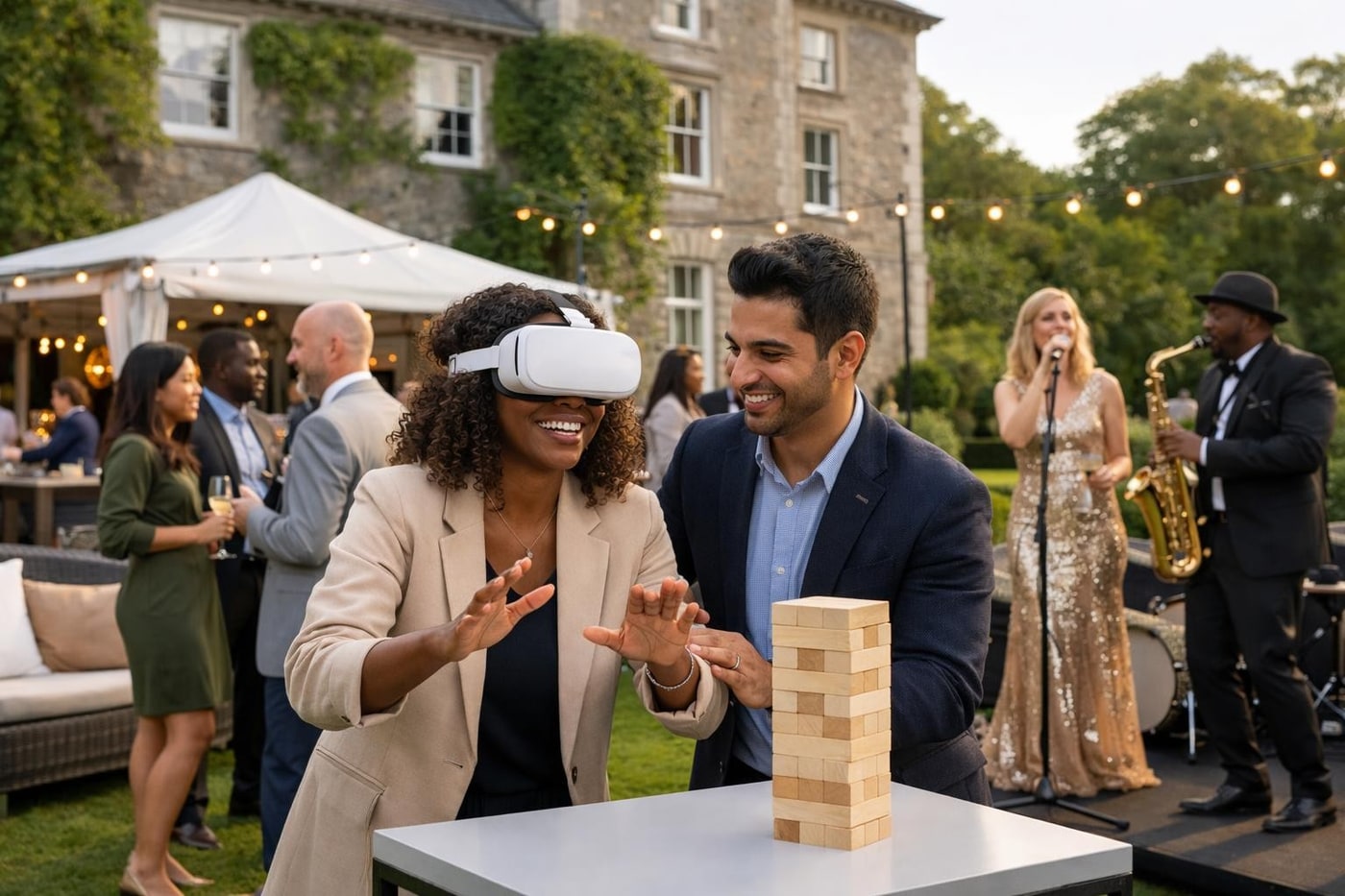
Engagement is stronger when guests feel involved.
Interactive entertainment might include roaming performers who speak to guests, musicians who respond to the crowd, games, brand challenges, live art, photo moments, workshops or immersive characters.
The interaction should suit the event audience. A family-friendly outdoor event may need playful entertainment, while a corporate hospitality event may require something more polished and subtle.
The aim is to give guests something to do, not just something to watch.
Keep Guests Moving Naturally
Large outdoor events work best when movement feels easy and enjoyable.
Entertainment can help guide that movement. Performers can draw guests towards quieter areas, lead people between zones or create interest around key locations.
For example, a roaming DJ might move through the site and gather attention in different places. A parade-style act could lead guests towards a central performance. Hosts could encourage people to explore different branded areas.
This makes the event feel more dynamic.
Plan for Weather
Outdoor events always need a weather plan.
Entertainment should be chosen and briefed with weather in mind. Some performers may need shelter, specific flooring, protection for equipment or alternative indoor areas.
Roaming entertainment may be more flexible than a fixed stage act in certain conditions, but it still requires planning.
Technical equipment, costumes, instruments and mobile rigs should all be assessed for suitability.
A strong contingency plan helps protect both the guest experience and the performers.
Use Branding Without Overdoing It
For corporate outdoor events, branding is often important. However, it should feel integrated rather than overwhelming.
Entertainment can carry brand identity in a creative way through styling, colours, music choices, custom-built rigs, costumes or themed interactions.
A bespoke roaming act can become a memorable brand feature without relying only on banners and signage.
This can make the brand feel more alive and more connected to the guest experience.
Final Thoughts
Keeping guests engaged at a large outdoor event requires careful planning, creative entertainment and a strong understanding of the site.
The best outdoor events do not rely on one fixed point of entertainment. They use movement, interaction and atmosphere to connect guests across the whole space.
Roaming performers, mobile music, visual acts, interactive experiences and well-planned zones can all help keep the event lively and memorable.
For corporate brands, this approach can turn a large open site into a connected, energetic and engaging guest experience.


