
Retail has changed dramatically

Not long ago, the role of retail spaces was relatively straightforward. Customers visited stores to purchase products, browse shelves and complete transactions. Today, however, customers increasingly expect something very different.
Retail spaces now compete with social media, online shopping, content platforms and entertainment experiences. Consumers no longer simply ask, What can I buy? Increasingly they ask, What can I experience?
This shift has transformed the way brands think about retail environments. For any retail activation agency, the brief is no longer just to make a space look appealing; it is to create a reason for people to stay, interact and remember the brand.
As attention around brands like Swatch continues to generate interest and conversation, it highlights a wider lesson for modern retail brands. Products may create curiosity. Experiences create emotional connection.
The retail landscape has become increasingly competitive

Modern consumers have more options than ever before. Products can be purchased instantly online. Reviews are available immediately. Information sits within easy reach.
This means retail spaces increasingly need to provide something that digital experiences cannot easily replicate. People can buy products online. People cannot always replicate atmosphere, interaction and shared experiences.
This creates an opportunity: retail environments can become destinations rather than simply spaces selling products.
What physical retail can still do best
Why experience-led retail continues to grow
Experiential retail focuses on creating environments where customers engage with brands through interaction and emotion. Rather than concentrating solely on transactions, experience-led environments create opportunities for connection.
Examples include:
- Interactive installations
- Entertainment
- Product demonstrations
- Live performances
- Influencer experiences
- Shareable moments
- Immersive environments
The objective is not simply increasing footfall. The objective is creating stronger engagement.
People increasingly remember how brands made them feel.
Consumers want to feel connected to brands
Consumers increasingly buy into personality and identity rather than products alone. People often connect with:
- Values
- Storytelling
- Community
- Emotion
- Authenticity
Experiences allow brands to bring these elements to life.
Products communicate information. Experiences communicate feeling. This often creates stronger long-term relationships between brands and audiences.
Why dwell time matters within retail environments
One of the strongest indicators of successful experiential retail is dwell time. Dwell time simply measures how long customers remain engaged within an environment.
The longer people naturally remain engaged, the greater the opportunity for interaction and connection.
Experiences that increase dwell time often include:
- Music
- Interactive moments
- Entertainment
- Visual installations
- Audience participation
- Shareable environments
Importantly, the objective is not keeping guests somewhere unnecessarily. The objective is creating environments people naturally want to remain within.
Our experience supporting the Swatch launch
At Events by Knight, we regularly see how experience can transform audience behaviour. When supporting the Swatch launch, the objective was not simply displaying products within a space.
The focus was creating an environment reflecting the wider personality of the brand. You can see more in our Swatch brand launch case study.
The experience included:
- A custom branded DJ booth
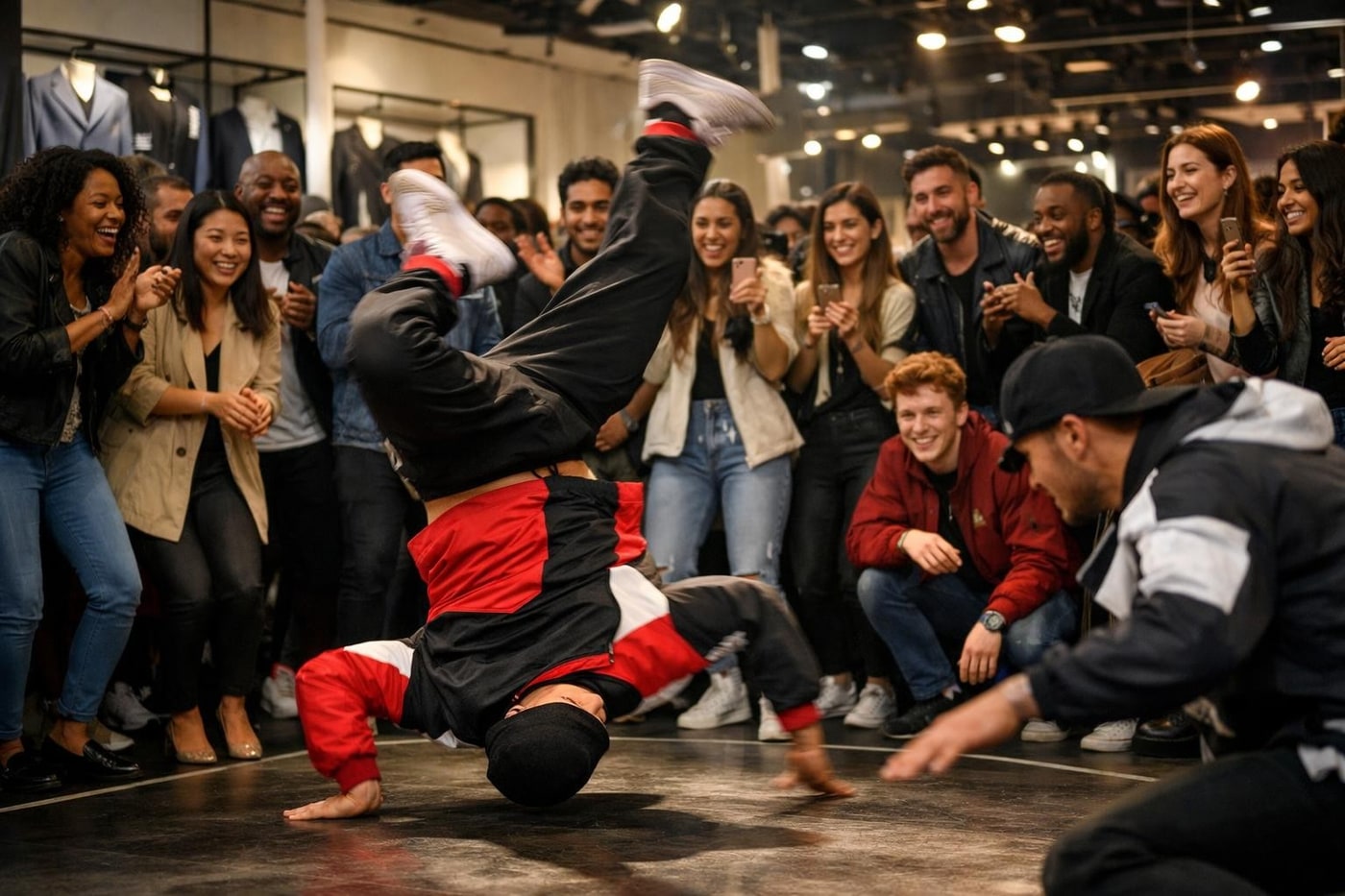
- High-energy breakdance performers
- Social sharing opportunities
- Strong visual engagement moments
- Natural audience interaction points
Entertainment was not positioned separately from the experience. It became integrated within the guest journey itself.
Guests naturally moved towards activity. Conversations developed organically. People interacted with the atmosphere around them. Rather than simply observing products, guests became immersed within the wider environment.
This often creates stronger emotional connection.
Kwame Knight insight
People rarely remember shelves or displays. They remember atmosphere, energy and experiences that felt different. Great retail experiences create emotional connection before transactions happen.
Kwame Knight - Creative Director, Events By Knight
Why social sharing has become increasingly important
One of the strongest advantages of experience-led retail environments is that they often create content naturally.
People increasingly share:
Customers themselves increasingly become part of the wider marketing process. Experiences continue long after customers leave, creating visibility that extends beyond the physical audience itself.
What brands can learn from Swatch
The lesson extends beyond watches. The lesson extends beyond retail. Brands increasingly need to think differently about attention.
The question is no longer, How do we place products in front of people? The question increasingly becomes, How do we create environments people want to engage with?
That shift often creates stronger impact.
Final thoughts for retail decision-makers
Retail continues evolving rapidly. Products still matter. Design still matters. Marketing still matters. But increasingly, experiences create stronger connection.
Swatch reinforces a broader lesson for brands: people do not simply want products. People increasingly want experiences.


